Short answer: A key that snaps off with half of it buried in the cylinder feels like the worst-case scenario, but the fragment can almost always come out and the lock is often salvageable. This guide explains why keys break in the first place, which do-it-yourself attempts actually help versus which ones make things worse, and exactly what a locksmith does to extract the piece and get your lock working again.
A key that snaps off with half of it buried in the cylinder feels like the worst-case scenario, but the fragment can almost always come out and the lock is often salvageable. This guide explains why keys break in the first place, which do-it-yourself attempts actually help versus which ones make things worse, and exactly what a locksmith does to extract the piece and get your lock working again.
Keys do not usually snap out of nowhere. Most breaks trace back to metal fatigue in a well-worn key, especially a copy that was made from another copy, so the cuts have drifted and the blade has thinned. Brass is a soft alloy, and a key that has been forcing a sticky or dry lock for months is already stressed before the day it finally gives way. Older homes around San Jose, including many of the mid-century houses in neighborhoods like Willow Glen and Naglee Park, still run original or vintage cylinders that bind more as they age, which quietly loads up the key until a normal turn is enough to break it.
If a stub of the key is still poking out past the face of the lock, you have a fair shot at removing it yourself. A spritz of dry, graphite-based lubricant, followed by a gentle grip on the protruding metal with fine needle-nose pliers or tweezers while easing it straight out, works more often than people expect. What reliably backfires: pushing the fragment deeper to try to line it up, jamming a second key in beside it, or reaching for superglue, which bonds the piece inside the cylinder and turns a simple extraction into a lock replacement. If the break is flush with or below the face of the lock, stop, because home attempts at that point usually just wedge it tighter.
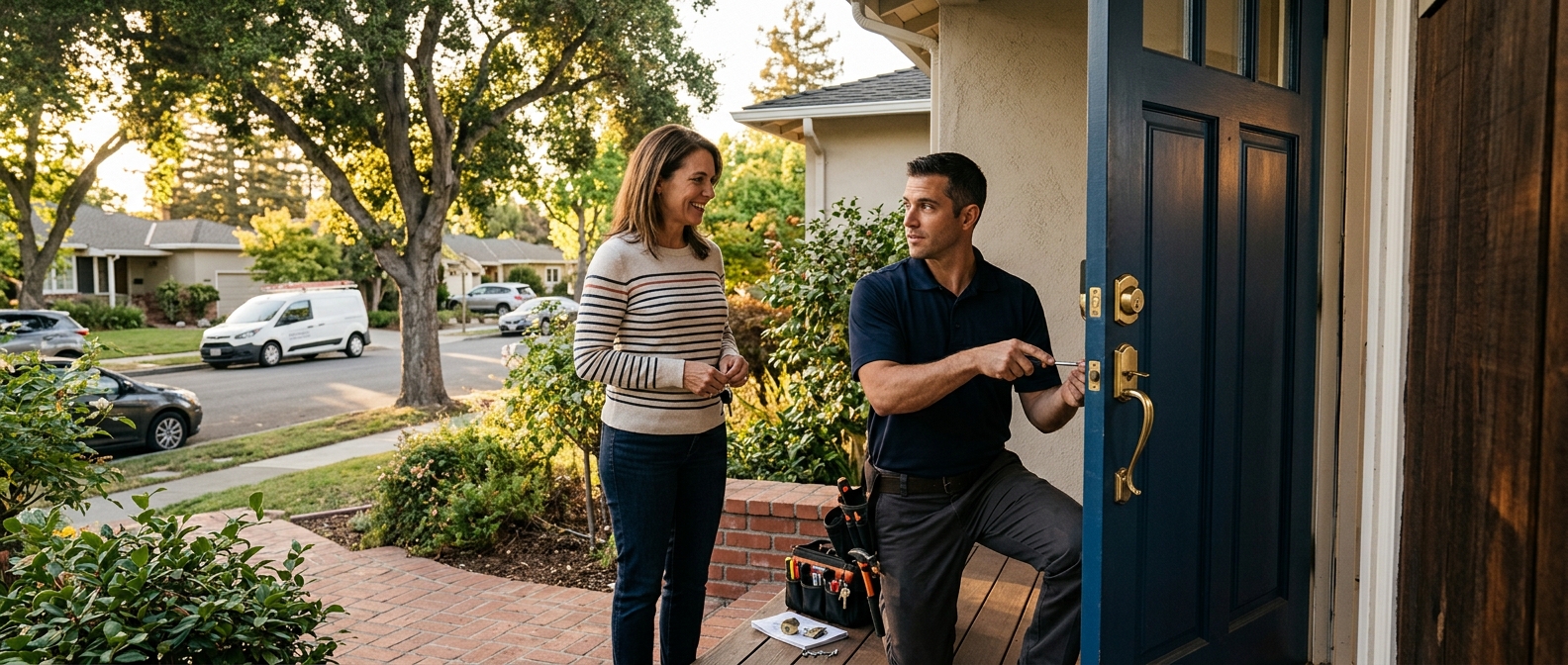
A locksmith carries slim broken-key extractor tools, thin hooked or barbed blades that slide alongside the fragment, catch a cut, and draw it out without harming the cylinder. Once the piece is clear, the tech tests the lock through its full travel to confirm nothing bent inside. Here is the part people miss: the smart move is not to copy the worn key that just broke, but to cut a fresh key to the lock so you are not repeating the same failure in a month. Extraction on its own typically falls in the range of roughly $75 to $185 depending on the lock and how deep the break sits, and if the cylinder itself is worn out, rekeying or replacing it is a reasonable add-on to discuss on the spot.
Keys do not usually snap out of nowhere. Most breaks trace back to metal fatigue in a well-worn key, especially a copy that was made from another copy, so the cuts have drifted and the blade has thinned. Brass is a soft alloy, and a key that has been forcing a sticky or dry lock for months is already stressed before the day it finally gives way. Older homes around San Jose, including many of the mid-century houses in neighborhoods like Willow Glen and Naglee Park, still run original or vintage cylinders that bind more as they age, which quietly loads up the key until a normal turn is enough to break it.
If a stub of the key is still poking out past the face of the lock, you have a fair shot at removing it yourself. A spritz of dry, graphite-based lubricant, followed by a gentle grip on the protruding metal with fine needle-nose pliers or tweezers while easing it straight out, works more often than people expect. What reliably backfires: pushing the fragment deeper to try to line it up, jamming a second key in beside it, or reaching for superglue, which bonds the piece inside the cylinder and turns a simple extraction into a lock replacement. If the break is flush with or below the face of the lock, stop, because home attempts at that point usually just wedge it tighter.
A locksmith carries slim broken-key extractor tools, thin hooked or barbed blades that slide alongside the fragment, catch a cut, and draw it out without harming the cylinder. Once the piece is clear, the tech tests the lock through its full travel to confirm nothing bent inside. Here is the part people miss: the smart move is not to copy the worn key that just broke, but to cut a fresh key to the lock so you are not repeating the same failure in a month. Extraction on its own typically falls in the range of roughly $75 to $185 depending on the lock and how deep the break sits, and if the cylinder itself is worn out, rekeying or replacing it is a reasonable add-on to discuss on the spot.
Call (408) 809-1388 and describe the situation, your exact location, and what you need. Timing is confirmed on that call rather than promised in advance.
Call for help: (408) 809-1388 — a straight answer and an honest estimate before any work begins.