Short answer: A deadbolt that you have to shove, lift the door against, or wrestle with the key to turn is not just annoying, it is a sign something is out of alignment or wearing out. Before you replace a perfectly good lock, it helps to know whether the problem is the lock or the door itself. This guide shows you how to tell them apart, which fixes genuinely last, and when it is worth calling a locksmith.
A deadbolt that you have to shove, lift the door against, or wrestle with the key to turn is not just annoying, it is a sign something is out of alignment or wearing out. Before you replace a perfectly good lock, it helps to know whether the problem is the lock or the door itself. This guide shows you how to tell them apart, which fixes genuinely last, and when it is worth calling a locksmith.
Open the door and throw the deadbolt with the door swung wide. If the bolt slides out smoothly with the door open but binds when the door is shut, the lock is fine and you have an alignment problem, the bolt is no longer meeting the hole in the strike plate cleanly. Seasonal movement is a common culprit here: doors swell and settle as Santa Clara Valley summers heat up and cool off, and hinge screws loosen over time and let the door sag a fraction of an inch, which is all it takes. Look at the strike plate on the frame, shiny scrape marks around the hole tell you exactly where the bolt is dragging.
Spraying oil into a binding deadbolt masks the symptom for a week and usually attracts grit that makes it worse, so aim for the real cause. If the door has dropped, driving one longer three-inch screw into the top hinge often pulls it back into square and re-centers the bolt. If the strike is only slightly off, you can file the strike opening a touch or reposition the plate so the bolt drops in freely. Paint buildup in the bolt hole and a gummed-up cylinder are two more quiet offenders; clean them out and use a dry, graphite-based lubricant inside the cylinder rather than a wet oil. When the key is hard to turn even with the door open, the wear is inside the lock itself and no amount of alignment work will fix it.
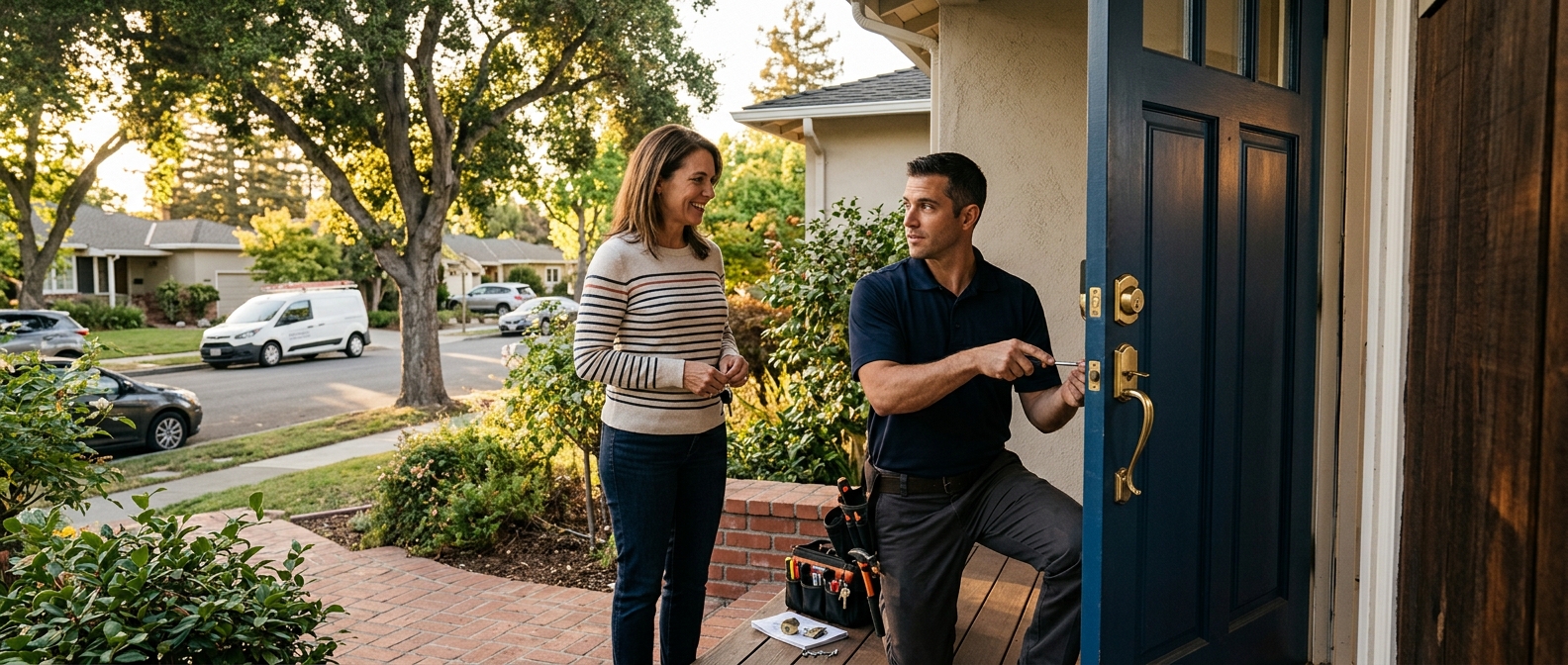
If the bolt is grinding, the key resists turning because of internal wear, or the door no longer feels secure when it is locked, it is worth bringing in a pro rather than forcing it and risking a snapped key or a bolt stuck in the frame. A locksmith will square up the alignment, replace the deadbolt if the cylinder is worn, and can rekey it to match your other locks in the same visit. A service call for realignment or a deadbolt swap in the San Jose area typically runs in the range of roughly $90 to $220 plus hardware, depending on the door and the lock. Since the tech is already there, it is a sensible moment to step up to a solidly graded deadbolt if your current one is a builder-basic unit.
Open the door and throw the deadbolt with the door swung wide. If the bolt slides out smoothly with the door open but binds when the door is shut, the lock is fine and you have an alignment problem, the bolt is no longer meeting the hole in the strike plate cleanly. Seasonal movement is a common culprit here: doors swell and settle as Santa Clara Valley summers heat up and cool off, and hinge screws loosen over time and let the door sag a fraction of an inch, which is all it takes. Look at the strike plate on the frame, shiny scrape marks around the hole tell you exactly where the bolt is dragging.
Spraying oil into a binding deadbolt masks the symptom for a week and usually attracts grit that makes it worse, so aim for the real cause. If the door has dropped, driving one longer three-inch screw into the top hinge often pulls it back into square and re-centers the bolt. If the strike is only slightly off, you can file the strike opening a touch or reposition the plate so the bolt drops in freely. Paint buildup in the bolt hole and a gummed-up cylinder are two more quiet offenders; clean them out and use a dry, graphite-based lubricant inside the cylinder rather than a wet oil. When the key is hard to turn even with the door open, the wear is inside the lock itself and no amount of alignment work will fix it.
If the bolt is grinding, the key resists turning because of internal wear, or the door no longer feels secure when it is locked, it is worth bringing in a pro rather than forcing it and risking a snapped key or a bolt stuck in the frame. A locksmith will square up the alignment, replace the deadbolt if the cylinder is worn, and can rekey it to match your other locks in the same visit. A service call for realignment or a deadbolt swap in the San Jose area typically runs in the range of roughly $90 to $220 plus hardware, depending on the door and the lock. Since the tech is already there, it is a sensible moment to step up to a solidly graded deadbolt if your current one is a builder-basic unit.
Call (408) 809-1388 and describe the situation, your exact location, and what you need. Timing is confirmed on that call rather than promised in advance.
Call for help: (408) 809-1388 — a straight answer and an honest estimate before any work begins.