Short answer: Standing on your own porch late at night with no key is stressful, but a home lockout is almost always fixable without damaging your door or paying for a new lock. Here is a clear, level-headed plan for what to check first, when it makes sense to call a locksmith, and how a professional actually gets you back inside.
Standing on your own porch late at night with no key is stressful, but a home lockout is almost always fixable without damaging your door or paying for a new lock. Here is a clear, level-headed plan for what to check first, when it makes sense to call a locksmith, and how a professional actually gets you back inside.
Before you decide you are truly locked out, do a slow lap of the house. Check the back slider, the side gate door, and any window you may have left cracked for airflow on a warm Santa Clara Valley evening. If you have an attached garage with a keypad, that keypad code is your fastest way in and does not depend on your house key at all. Ask whether a partner, roommate, or a neighbor holding your spare is reachable. What you should NOT do is start prying at a window frame or sliding a card against your deadbolt, that trick does not defeat a deadbolt and it tends to chew up weatherstripping and door edges, turning a no-cost problem into a repair bill.
If it is genuinely cold, someone in your group is elderly, very young, or unwell, a medication or a pet is stuck inside, or you have an early morning ahead, it is reasonable to call for help rather than tough it out on the porch. When you call, ask two questions up front: an honest arrival window and a price range for a residential lockout at that hour. After-hours home lockouts in the San Jose area typically run in the range of roughly $95 to $250 depending on the time of night, how far the tech travels, and the type of lock, so treat any refusal to give a ballpark as a red flag. Have a photo ID and something showing you live there ready, because a trustworthy locksmith will confirm residency before opening the door.
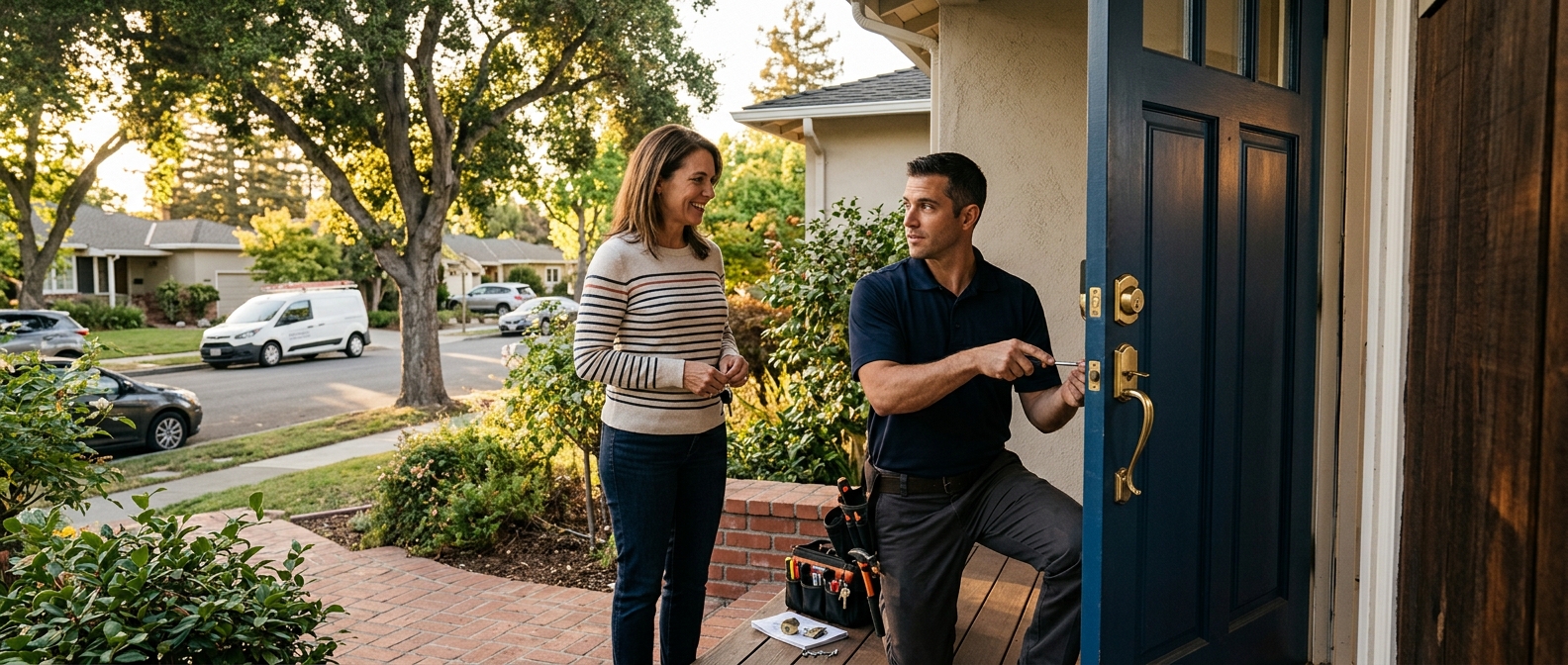
For a standard residential deadbolt or knob, an experienced locksmith works the lock open with picks or bypass tools rather than damaging it, so you keep the hardware you already own. Drilling is a genuine last resort reserved for certain high-security or seized cylinders, and a good tech will tell you before doing anything irreversible. Once you are back inside, it is worth a five-minute conversation about prevention: hiding a spare with a neighbor instead of under the mat, adding a keypad deadbolt so a code replaces the key, or having your locks rekeyed if you have lost track of who holds copies.
Before you decide you are truly locked out, do a slow lap of the house. Check the back slider, the side gate door, and any window you may have left cracked for airflow on a warm Santa Clara Valley evening. If you have an attached garage with a keypad, that keypad code is your fastest way in and does not depend on your house key at all. Ask whether a partner, roommate, or a neighbor holding your spare is reachable. What you should NOT do is start prying at a window frame or sliding a card against your deadbolt, that trick does not defeat a deadbolt and it tends to chew up weatherstripping and door edges, turning a no-cost problem into a repair bill.
If it is genuinely cold, someone in your group is elderly, very young, or unwell, a medication or a pet is stuck inside, or you have an early morning ahead, it is reasonable to call for help rather than tough it out on the porch. When you call, ask two questions up front: an honest arrival window and a price range for a residential lockout at that hour. After-hours home lockouts in the San Jose area typically run in the range of roughly $95 to $250 depending on the time of night, how far the tech travels, and the type of lock, so treat any refusal to give a ballpark as a red flag. Have a photo ID and something showing you live there ready, because a trustworthy locksmith will confirm residency before opening the door.
For a standard residential deadbolt or knob, an experienced locksmith works the lock open with picks or bypass tools rather than damaging it, so you keep the hardware you already own. Drilling is a genuine last resort reserved for certain high-security or seized cylinders, and a good tech will tell you before doing anything irreversible. Once you are back inside, it is worth a five-minute conversation about prevention: hiding a spare with a neighbor instead of under the mat, adding a keypad deadbolt so a code replaces the key, or having your locks rekeyed if you have lost track of who holds copies.
Call (408) 809-1388 and describe the situation, your exact location, and what you need. Timing is confirmed on that call rather than promised in advance.
Call for help: (408) 809-1388 — a straight answer and an honest estimate before any work begins.